Quick Answer: What Is a Slush Beverage and How Is It Made?
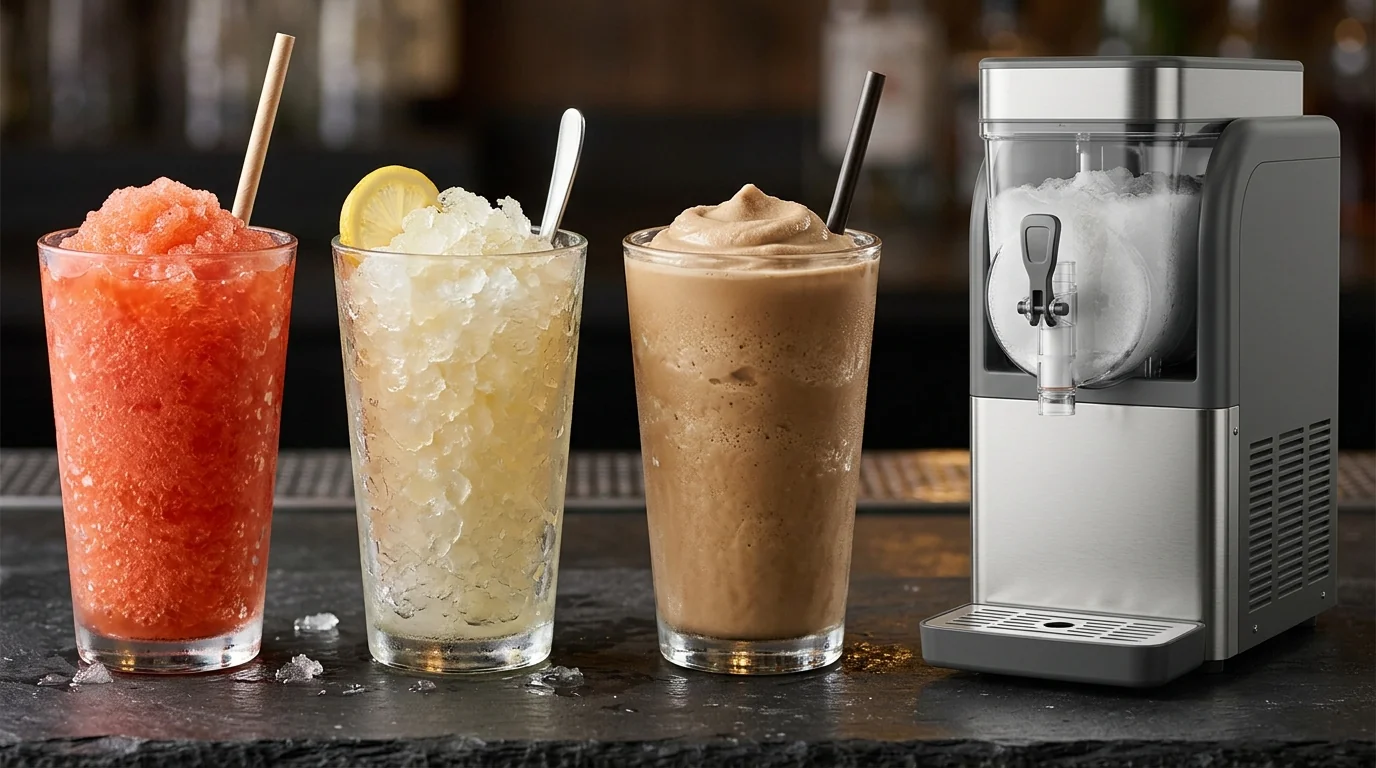
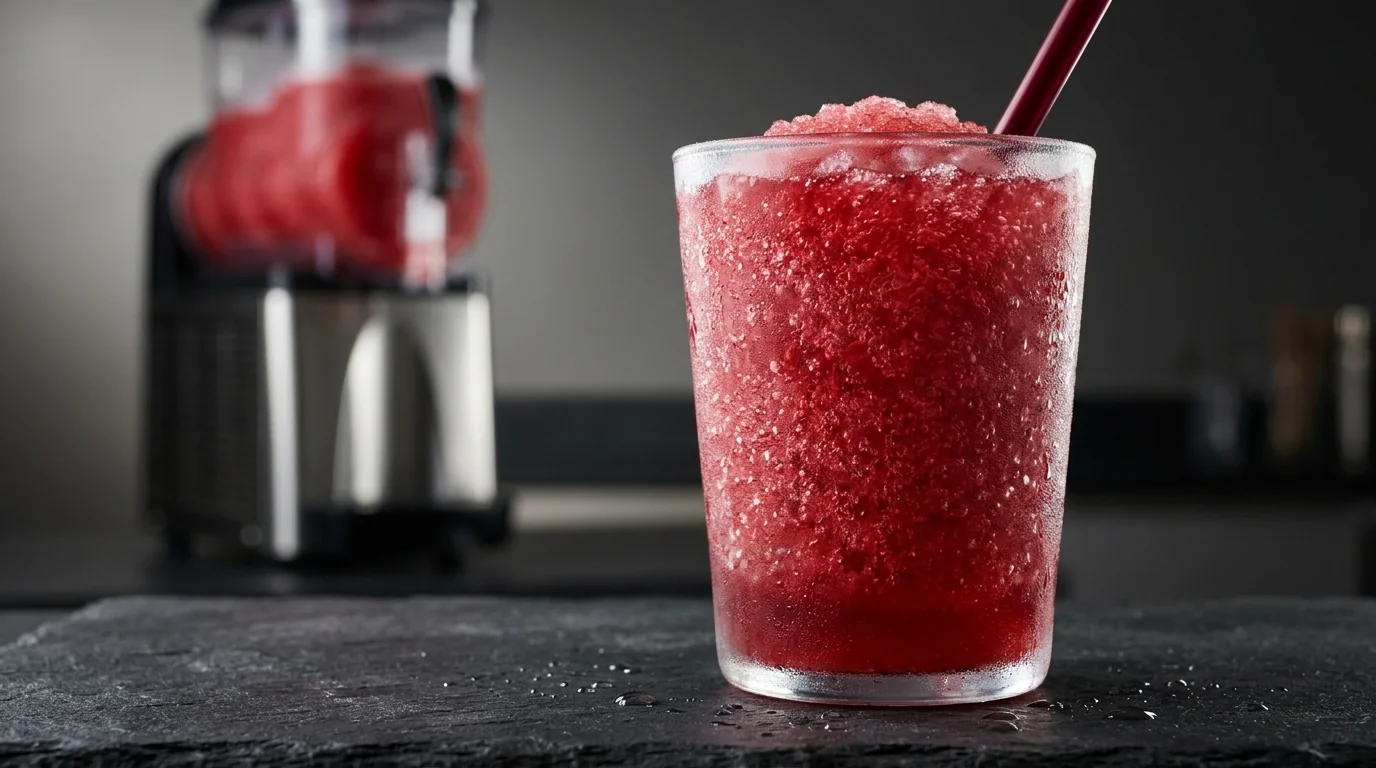
A slush (also called a slushy, slushie, or frozen crystal beverage) is a semi-frozen drink composed of millions of fine, uniform ice crystals suspended inside a flavored sugar-and-water solution. Unlike blended crushed ice that separates quickly in a glass, true slush is formed inside a dedicated slush machine where a refrigeration cylinder cools the liquid below 0°C while a rotating auger continuously scrapes and agitates the freezing wall. Dissolved sugar (typically 12 to 16 Brix) lowers the freezing point so the mixture turns into a smooth, pourable crystalline suspension in roughly 40 minutes on compact 1.8L countertop platforms.
What Is the Science Behind Slush? Freezing-Point Depression and Crystal Suspension
If you pour pure water into a refrigerated cylinder, hydrogen bonds lock the water molecules into a solid block of ice as soon as the temperature reaches 0°C (32°F). A slush beverage avoids freezing solid by relying on two simultaneous physical mechanisms: freezing-point depression from dissolved solutes (primarily sugar or alcohol) and continuous mechanical shear from a rotating auger paddle.
When sucrose, fruit syrup, or juice concentrate is dissolved in water at a concentration of roughly 12% to 16% by weight (measured as 12 to 16 degrees Brix on an optical refractometer), the dissolved sugar molecules interfere with ice crystal lattice growth. As the evaporator cylinder chills the beverage mixture to between -2°C and -4°C, pure water begins nucleating into microscopic ice crystals on the cold cylinder surface. Before those crystals can fuse into a solid sheet, the rotating auger sweeps them into the liquid core, leaving a concentrated syrup matrix around each suspended ice grain.
This continuous dynamic equilibrium produces the signature mouthfeel of a true machine-made slush: uniform, rounded micro-crystals that flow smoothly through a dispensing tap and can be sipped effortlessly through a straw without liquid-ice separation. Understanding this physics helps B2B beverage equipment buyers distinguish true countertop slush machines from household blenders or shaved-ice snow-cone makers.
How Does a Countertop Slush Machine Work Compared to Ice Makers, Blenders, and Soft-Serve Units?
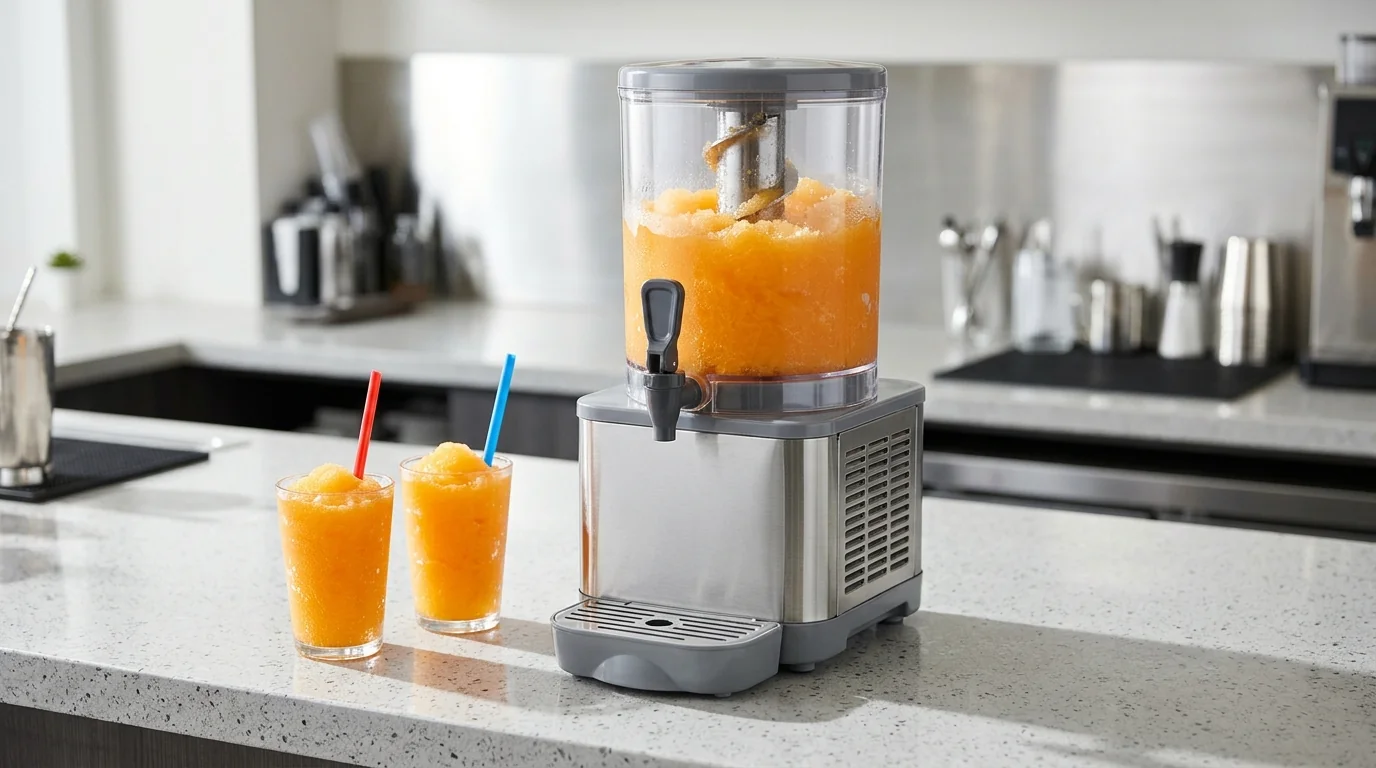
In B2B appliance sourcing, slush machines belong to an independent frozen beverage product line rather than the solid ice maker category. While solid ice makers in Crylivo's countertop ice maker and cooling appliance catalog freeze plain potable water into discrete nuggets, bullets, cubes, or spheres and drop them into a dry bin, a slush machine freezes and dispenses the finished flavored beverage itself inside a sealed food-contact tank.
On compact countertop platforms in Crylivo's countertop slush machine product line, the appliance integrates an air-cooled compressor (205W rated input on selected 2-in-1 countertop ice cream and slush platforms), a 1.8L transparent beverage tank, a motorized agitator auger, and a front dispensing handle constructed with ABS, PS, and SUS304 stainless steel components. Within a reference processing time of approximately 40 minutes depending on initial liquid temperature and ambient conditions, the batch reaches serving consistency and stays agitated until dispensed.
| Appliance Category | Countertop Slush Machine | High-Speed Kitchen Blender | Shaved Ice / Snow-Cone Maker | Soft-Serve Ice Cream Machine |
|---|---|---|---|---|
| Core Mechanism | Active refrigeration cylinder + continuous slow auger agitation | High-RPM steel blades pulverizing pre-made solid ice cubes | Mechanical blades shaving solid ice blocks or cubes; syrup poured on top | Pressurized or gravity freezing cylinder whipping dairy fat and air overrun |
| Liquid Input | Pre-mixed sugar beverage (typically 12-16 Brix); no pre-made ice needed | Requires separate ice supply plus liquid mixer | Plain solid ice plus post-dispense flavored syrup | Dairy or plant-based soft-serve mix with fat and emulsifiers |
| Crystal Texture & Stability | Uniform micro-crystals suspended in liquid; holds texture in tank | Crushed ice shards that separate from liquid within minutes | Dry fluffy snow; syrup drains quickly to the bottom of the cup | Aerated creamy semi-solid ribbon dispensed into cones or cups |
| Reference Tank & Cycle Spec | 1.8L tank capacity; approx. 40 min processing time (205W platform ref.) | Single-pitcher batch (1-2 min blend; zero holding capability) | Single-cup manual shaving; zero holding capability | Dedicated dairy hopper or 2-in-1 dual-mode countertop platform |
| Primary B2B Channel Fit | Specialty kitchen retail, cafe/bar programs, entertainment appliances | General small kitchen appliance mass retail | Seasonal carnival, kiosk, and novelty toy channels | Dessert cafes, QSR chains, or multi-mode home dessert lines |
Note: Reference specifications (1.8L tank capacity, ~40 min processing time, 205W rated power, ABS+PS+SUS304 materials) reflect Crylivo's 2-in-1 countertop platform benchmark and must be confirmed per model.
Why Sugar Content (Brix Ratio) and Alcohol Limits Matter in Slush Machine Operation
The most important operational rule for any auger-driven slush machine—whether a large commercial convenience-store dispenser or a compact 1.8L countertop unit—is maintaining the correct dissolved sugar concentration. If a user pours diet soda, unsweetened black tea, or plain water with less than 12% sugar into a slush freezing cylinder, the freezing point remains too close to 0°C. Instead of forming soft slush crystals, the liquid freezes into a solid ice ring around the evaporator, triggering auger motor overload protection or stalling the paddle.
Conversely, if a syrup mixture exceeds roughly 20 to 22 Brix—or contains excessive high-proof alcohol in frozen margarita or daiquiri recipes—the freezing point drops below the evaporator's target operating range, resulting in a cold liquid that takes much longer than the 40-minute reference cycle to thicken. Leading private label brands include a simple Brix and recipe chart right inside the user manual and quick-start guide so end users achieve perfect slush texture on their first batch, significantly reducing unnecessary warranty returns.
What Should B2B Buyers Verify When Sourcing Countertop Slush Machines?
Because a slush machine processes sugar-rich liquids, fruit acids, and optional dairy mixes inside a transparent bowl and dispensing tap, food-contact hygiene, easy disassembly, and motor protection are top priorities during B2B sample evaluation. Importers working with Crylivo's ISO 9001:2015 appliance manufacturing and private label team should review both mechanical build quality and destination-market compliance records.
On the regulatory front, selected Crylivo 1.8L countertop slush platforms reference R290 refrigerant, which should be checked against regional hydrocarbon rules such as the U.S. EPA SNAP hydrocarbon refrigerant guidelines. Because the transparent PS/ABS tank, auger blades, silicone seals, and SUS304 stainless steel surfaces contact acidic fruit beverages directly, buyers must request model-specific food-contact test reports meeting U.S. FDA 21 CFR food-contact substance regulations or European LFGB standards, alongside electrical safety approvals such as the Intertek ETL Listed safety mark or CE/CB/RoHS documentation.
- Tank Capacity and Material Clarity: Verify the 1.8L transparent bowl capacity, wall thickness, and scratch resistance of the ABS+PS+SUS304 assembly during multi-batch testing.
- Processing Time and Multi-Mode Versatility: Test the ~40-minute reference processing cycle with a standard 13-15 Brix beverage mix, and check whether the selected platform supports 2-in-1 soft ice cream and slush modes.
- Auger Torque Protection and Low-Brix Safeguards: Confirm how the 205W system detects auger resistance and prevents gear or motor damage if a user accidentally loads a low-sugar mixture.
- Tool-Free Disassembly for Cleaning: Ensure that the transparent tank, auger paddle, drip tray, and dispensing tap gasket can be removed and rinsed cleanly by hand without specialized tools.
- Private Label Onboarding & Recipe Guides: Customize housing color accents, front logo badges, control panel icons, retail gift boxes, and quick-start recipe cards explaining sugar/Brix ratios.
Frequently Asked Questions
Can you make slush in a countertop slush machine using sugar-free or diet drinks?
Standard auger-driven slush machines require dissolved sugar (typically 12 to 16 Brix) or natural freezing-point depressants (such as erythritol or allulose in properly formulated syrups) to prevent the liquid from freezing into a solid block on the evaporator.
How long does a compact countertop slush machine take to make a batch of slush?
On Crylivo's 1.8L countertop platform (205W rated input), a standard batch takes approximately 40 minutes to reach serving slush consistency, depending on pre-chilled vs. room-temperature liquid input, sugar ratio, and ambient room temperature.
Does a countertop slush machine require ice cubes to be added first?
No, a true compressor-driven countertop slush machine freezes liquid beverage mix directly inside its 1.8L tank without needing any pre-made ice cubes, water line plumbing, or pre-frozen freezer bowls.
What is the difference between a dedicated slush machine and a 2-in-1 ice cream and slush machine?
A 2-in-1 countertop platform combines microprocessor temperature and auger control modes that handle both crystalline water-based slush drinks and soft-textured ice cream mixes in a compact 1.8L unit, expanding retail appeal for home entertainment brands.
What compliance documents should B2B buyers request before importing slush machines?
Buyers should request model-specific electrical safety certificates (ETL for North America or CE/CB/RoHS for Europe), FDA 21 CFR or EU LFGB food-contact test reports covering the tank, auger, and tap seals, and R290 refrigerant documentation.
Explore Countertop Slush Machine Sourcing with Crylivo
Looking to expand your beverage appliance catalog with a compact 1.8L countertop slush or 2-in-1 frozen drink machine? Crylivo supports global appliance brands, retail importers, and hospitality distributors with ready-to-market slush platforms, model-specific compliance documentation, and light private label customization for logos, colors, control panels, and packaging. Connect with our team on the Crylivo B2B sourcing and sample inquiry page to review model specifications, target market voltage options, and sample availability.
Looking for the right ice maker for your market?
Tell us your ice type, capacity and target region. Our team will recommend the best platform from our OEM/ODM lineup.
Get a Quote →