Quick Answer: What Is Sphere Ice and Why Do Beverage Buyers Choose It?
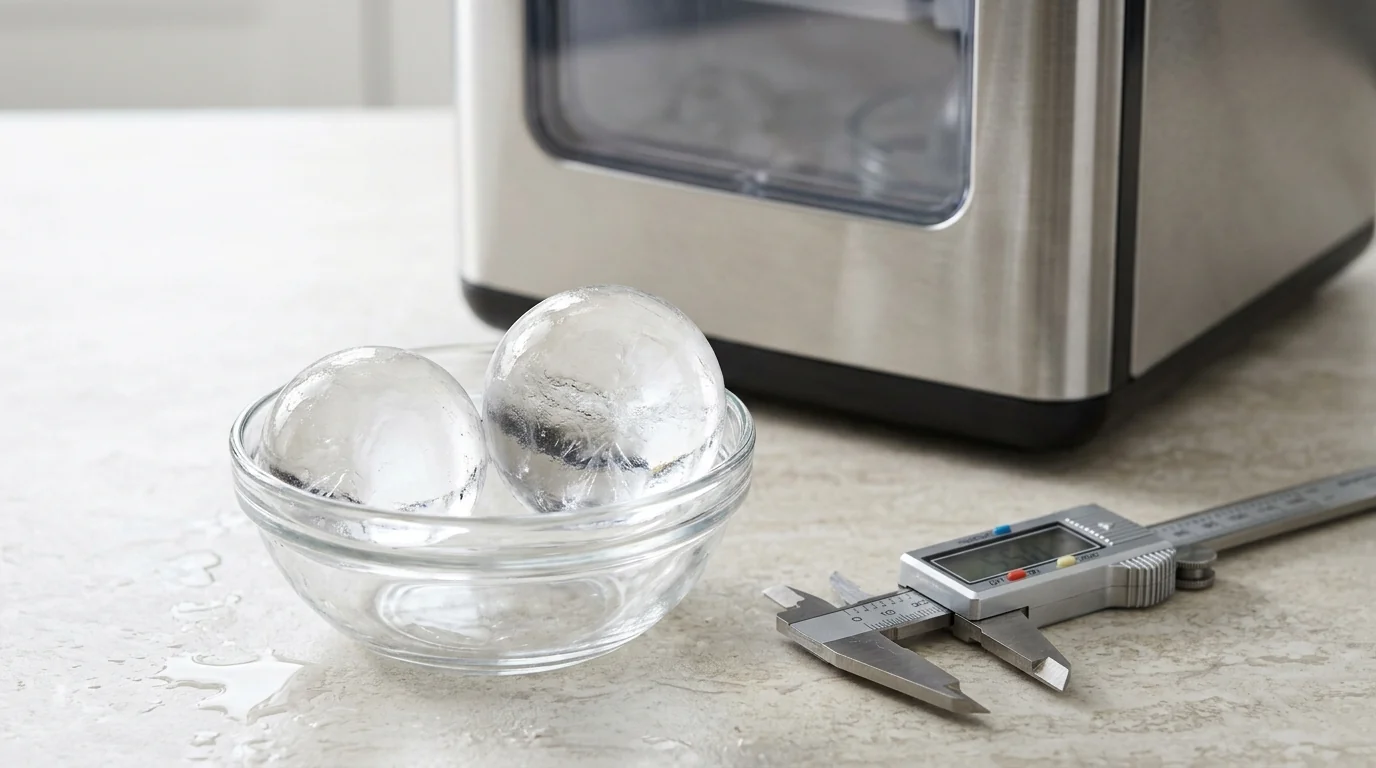
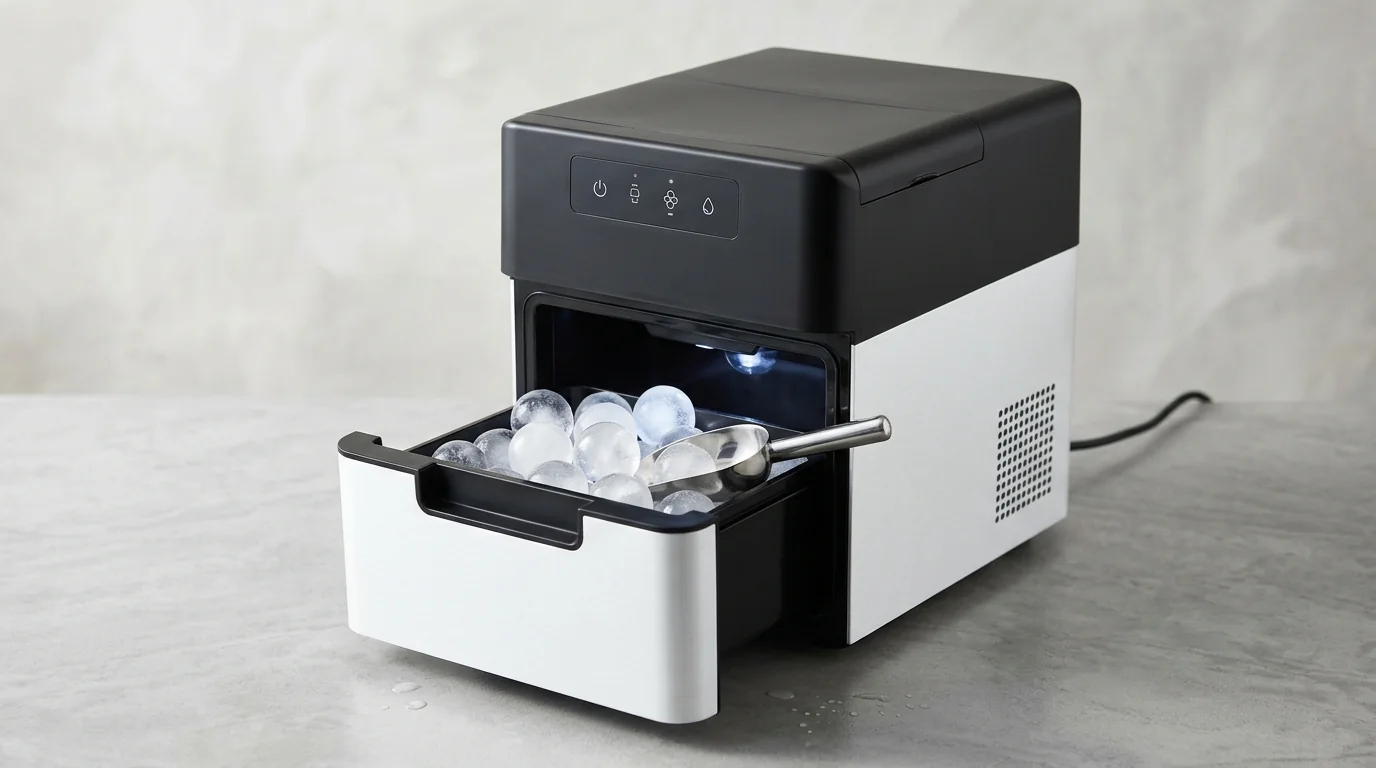
Sphere ice (also called ball ice) is a solid, round format of ice typically formed in a 50mm to 55mm diameter for spirits, craft cocktails, and specialty cold beverages. Because a sphere encloses the largest volume of ice within the smallest possible external surface area, a single 50mm or 55mm ice ball melts and dilutes drinks significantly slower than an equivalent weight of smaller square or bullet ice cubes. For appliance brands, hospitality suppliers, and retail importers, automatic countertop sphere ice makers deliver repeatable round ice without the labor and freezer space required by manual silicone molds.
How Does Sphere Ice Geometry Reduce Surface Area and Slow Dilution?
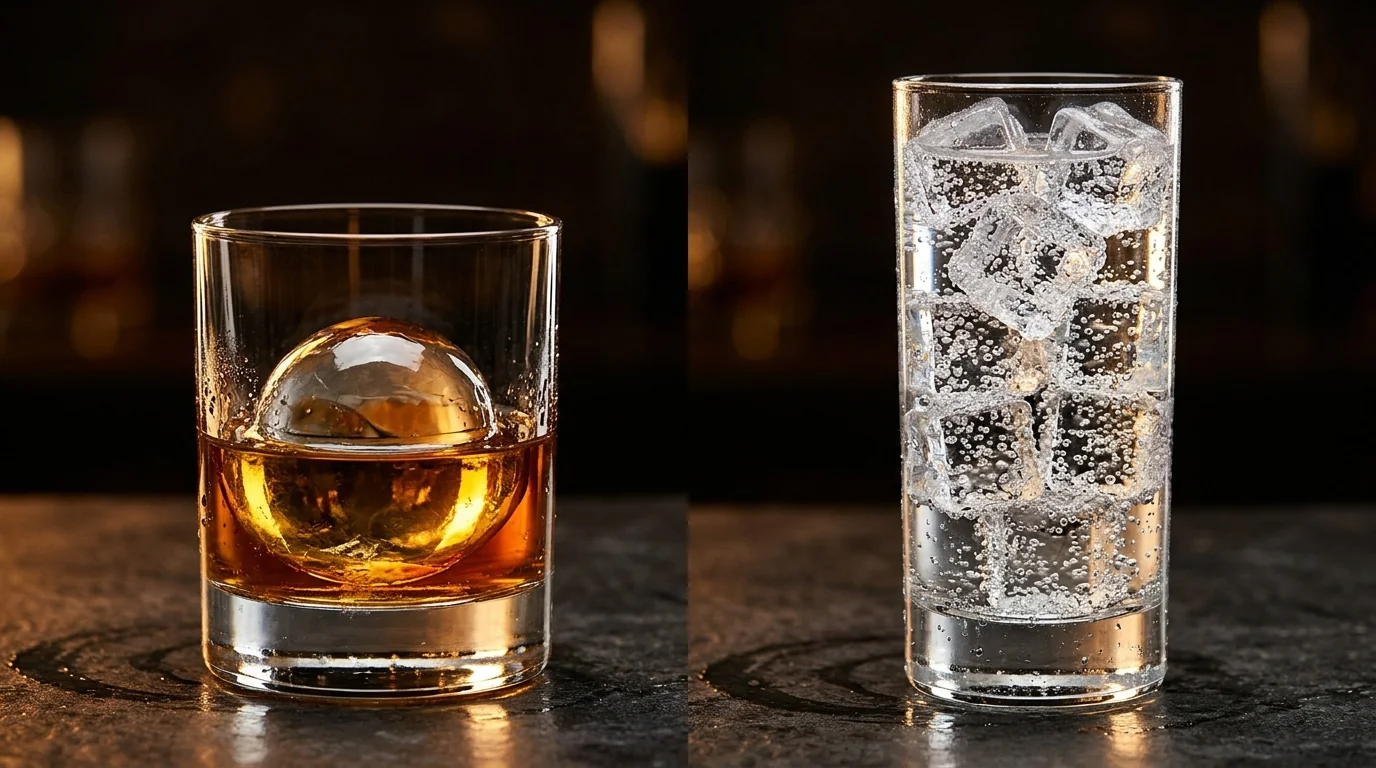
In beverage service, ice performs two simultaneous jobs that must be balanced carefully: chilling the liquid via thermal conduction and releasing meltwater as heat transfers into the ice. When a bartender or consumer pours room-temperature whiskey, bourbon, or an espresso cocktail over small high-surface-area ice pieces, rapid initial melting chills the drink quickly but continues diluting the flavor profile long after the target serving temperature is reached. Sphere ice solves this thermodynamic problem by concentrating mass into a single three-dimensional geometric form that minimizes exposed contact area with the surrounding liquid.
From a geometric standpoint, a sphere has the lowest surface-area-to-volume ratio of any solid shape. A single 55mm ice sphere has a volume of approximately 87 cubic centimeters and an external surface area of roughly 95 square centimeters. Obtaining that same cooling mass from standard 20x20x20mm square cubes requires roughly eleven individual cubes, which collectively expose more than 260 square centimeters of ice surface to the beverage. Because heat transfer occurs across the exposed surface boundary, reducing contact area by nearly two-thirds slows ongoing melt rate while keeping the drink cold from the first sip to the last.
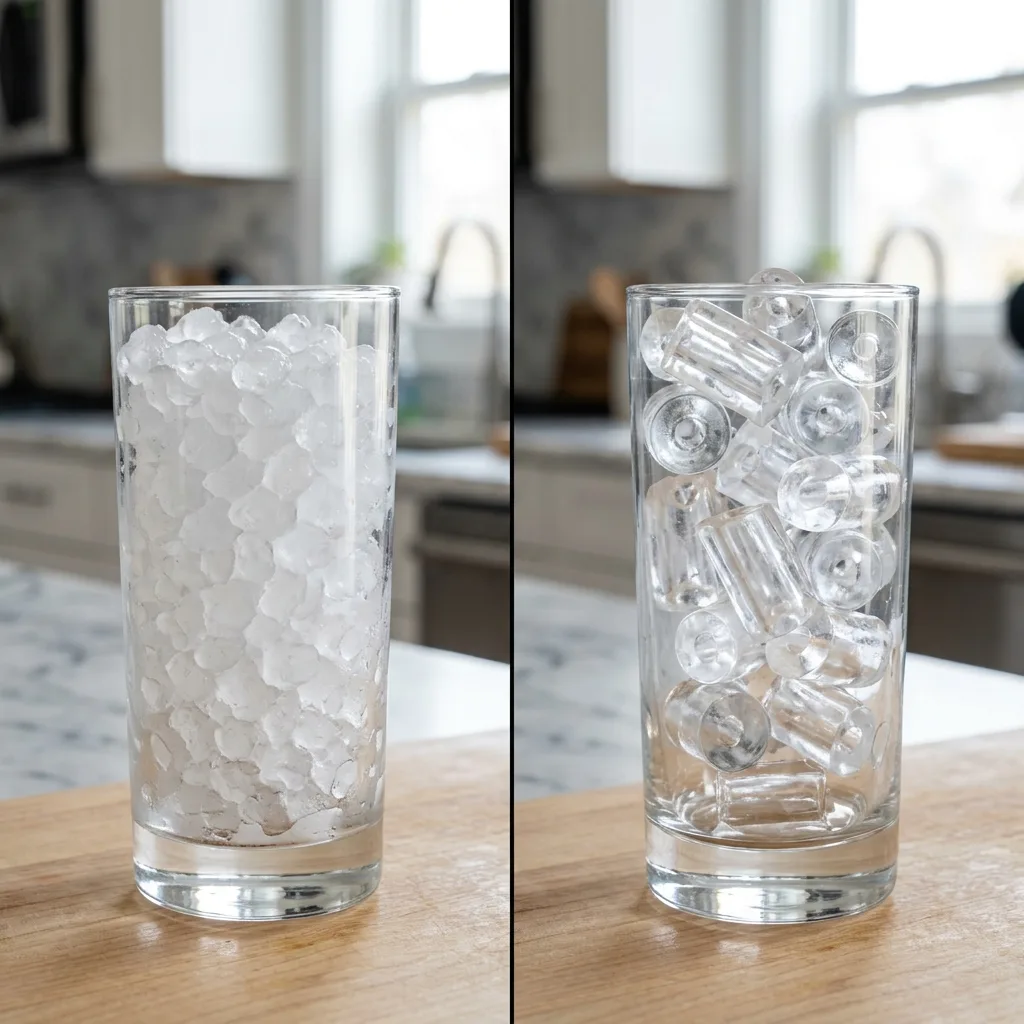
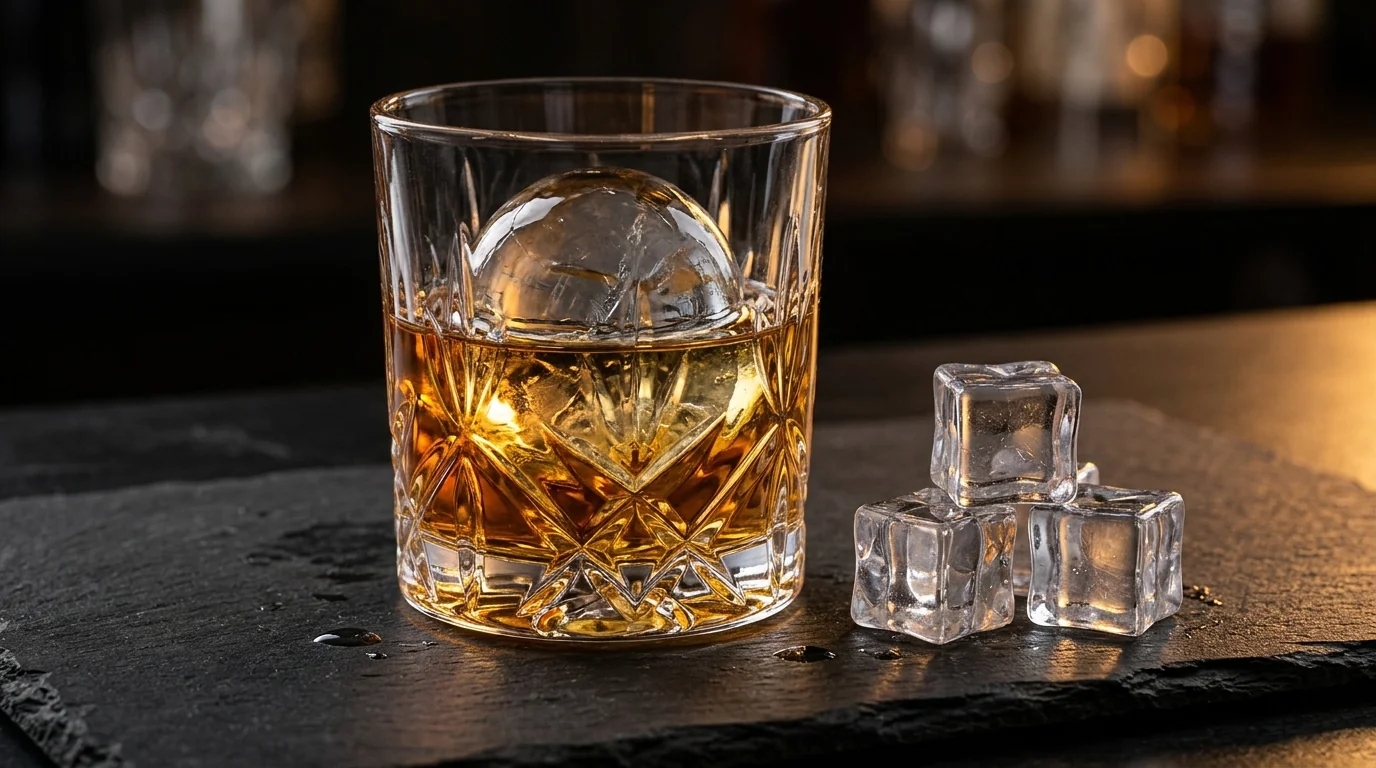
This slow-melting behavior makes sphere ice the preferred format for aged spirits, old-fashioned cocktails, Negronis, high-end iced coffee, and tasting flights where flavor concentration matters. Unlike porous chewable nugget ice discussed in our guide on what nugget ice is and how chewable ice works, solid sphere ice is engineered to resist rapid structural breakdown in alcohol-heavy or warm pours. That functional distinction allows appliance distributors to position sphere machines as a dedicated premium home-bar and executive hospitality category rather than a generic kitchen commodity.
How Does an Automatic Countertop Sphere Ice Maker Work Compared to Silicone Molds?
Buyers researching round ice online frequently encounter consumer search results mixed with silicone freezer trays, plastic two-piece ice ball molds, and manual aluminum ice presses. From a B2B product category standpoint, an automatic countertop sphere ice maker is an active electrically powered refrigeration appliance rather than a passive freezer accessory. Instead of filling rubber molds by hand, spilling water in a freezer drawer, and waiting six to twelve hours for two ice balls, an automatic machine integrates a self-contained water reservoir, an enclosed freezing chamber, a compressor-driven evaporator assembly, and an automated harvest cycle.
During operation, water from the internal 1.2L reservoir is metered into precision hemispherical mold cavities inside the freezing chamber. As the air-cooled refrigeration loop extracts heat, ice forms progressively inside the enclosed mold cavity over a 35 to 55 minute cycle, producing 2 round spheres of 50mm or 55mm diameter per batch depending on the selected platform. Once the freezing cycle completes, an automated release mechanism warms the mold interface just enough to drop the finished spheres cleanly into the insulated front storage basket before starting the next batch automatically.
Across a 24-hour operating window, compact countertop platforms in Crylivo's automatic sphere ice maker collection are designed around reference outputs of 42 to 72 spheres per day depending on sphere diameter (50mm vs. 55mm), ambient room temperature, and incoming water temperature. Infrared bin-full and water-shortage sensors pause production automatically when the storage drawer is full or the tank needs refilling. This hands-free workflow makes countertop sphere ice machines practical for home wet bars, office executive suites, VIP tasting rooms, and boutique hotel lounges.
Sphere Ice vs. Cube Ice vs. Bullet Ice vs. Nugget Ice: Side-by-Side Comparison
When building a balanced small cooling appliance portfolio, category managers often pair entry-level everyday ice makers with higher-margin specialty beverage formats. Comparing sphere ice against standard square cube, hollow bullet, and chewable nugget platforms across Crylivo's countertop ice maker catalog helps procurement teams assign clear channel roles to each SKU without internal product cannibalization.
| Comparison Dimension | Sphere / Ball Ice | Square Cube Ice | Bullet Ice | Nugget / Pebble Ice |
|---|---|---|---|---|
| Ice Geometry & Structure | Solid round sphere (50mm or 55mm diameter) | Solid square cube (approx. 20x20mm) | Rounded cylindrical piece with hollow center | Compacted porous flake cylinder, chewable |
| Surface-to-Volume Ratio | Lowest (minimal exposed surface per gram) | Moderate (flat faces, crisp corners) | High (outer wall plus inner hollow cavity) | Highest (micro-porous internal air pockets) |
| Melt & Dilution Speed | Slowest melt; preserves spirit proof and aroma | Moderate melt; balanced chilling and dilution | Fast initial chill; faster ongoing dilution | Rapid chill and flavor absorption |
| Platform Reference Cycle Time | 35-55 min per cycle (2 spheres per batch) | Approx. 14 min per cycle (24 cubes per batch) | 6-10 min per cycle (9 pieces per batch) | 6-8 min first ice (continuous auger extrusion) |
| 24-Hour Reference Output | 42-72 pcs / 24h (model and ambient dependent) | Up to 11.8 kg / 24h reference output | Up to 15 kg (33 lb) / 24h reference output | Up to 15 kg (33 lb) / 24h reference output |
| Primary B2B Channel Fit | Home bar brands, whiskey/spirit programs, executive lounges | Daily beverage service, offices, home kitchens | Mass retail, RV/camping, entry-level countertop lines | Coffee/tea bars, soda enthusiasts, premium kitchen retail |
Note: Reference cycle times, water tank capacities, and 24-hour outputs reflect platform benchmarks and must be confirmed by exact machine model, voltage version, ambient test conditions, and sample testing.
Where Do Automatic Sphere Ice Makers Fit in Retail, Hospitality, and Gift Channels?
Unlike high-volume bullet ice makers that compete primarily on price per kilogram of daily ice output, automatic sphere ice makers compete on beverage presentation, gifting appeal, and lifestyle differentiation. Home bar and kitchen appliance brands use countertop sphere ice makers as hero SKUs that anchor seasonal promotions around Father's Day, Q4 holiday gifting, and home entertainment campaigns. Because the consumer value proposition is tied to craft cocktails and slow-melting whiskey spheres rather than bulk cooler filling, buyers evaluate industrial design, angled control panels, and viewing windows alongside ice quality.
In light hospitality and corporate channels, compact countertop sphere machines serve VIP boardrooms, boutique hotel suites, cigar and whiskey lounges, and specialty coffee bars offering cold-brew on the rock. These environments rarely have under-counter floor drains or dedicated commercial plumbing lines, making a self-contained 1.2L countertop water tank design highly practical. Beverage and spirit distributors also source private-label countertop sphere machines for promotional bundle programs and tasting events.
For e-commerce and omnichannel retail buyers, keyword positioning is equally important when launching this category. Search engine results for short phrases like "ice ball maker" often mix $10 silicone molds with $300+ electric appliances. Structuring product titles and retail listings around explicit machine terminology—such as automatic sphere ice maker, countertop ice ball machine, and 50-55mm electric whiskey ice maker—ensures that high-intent appliance buyers land on the right hardware offering.
What Should B2B Buyers Verify Before Sourcing Countertop Sphere Ice Makers?
Sourcing an automatic sphere ice maker requires different technical verification checkpoints than sourcing a standard bullet ice machine because the mold-closure mechanism, longer 35 to 55 minute freezing cycle, and sphere release assembly involve tighter mechanical tolerances. Procurement teams working through Crylivo's ISO 9001:2015 quality management and private label customization system should evaluate physical samples and model documentation before locking in purchase orders.
On the regulatory and material side, buyers must verify refrigerant rules, food-contact declarations, and electrical safety certificates by exact model and target market. Selected Crylivo sphere platforms reference R290 hydrocarbon refrigerant, which should be reviewed against destination rules such as the U.S. EPA SNAP hydrocarbon refrigerant program or European F-gas guidelines. Sourcing teams should also request model-specific material test reports covering the water tank, tubing, mold cavity, and ice basket under U.S. FDA 21 CFR food-contact substance regulations or EU LFGB standards, along with electrical safety documentation such as the Intertek ETL Listed safety mark for North America or CE/CB reports for European distribution.
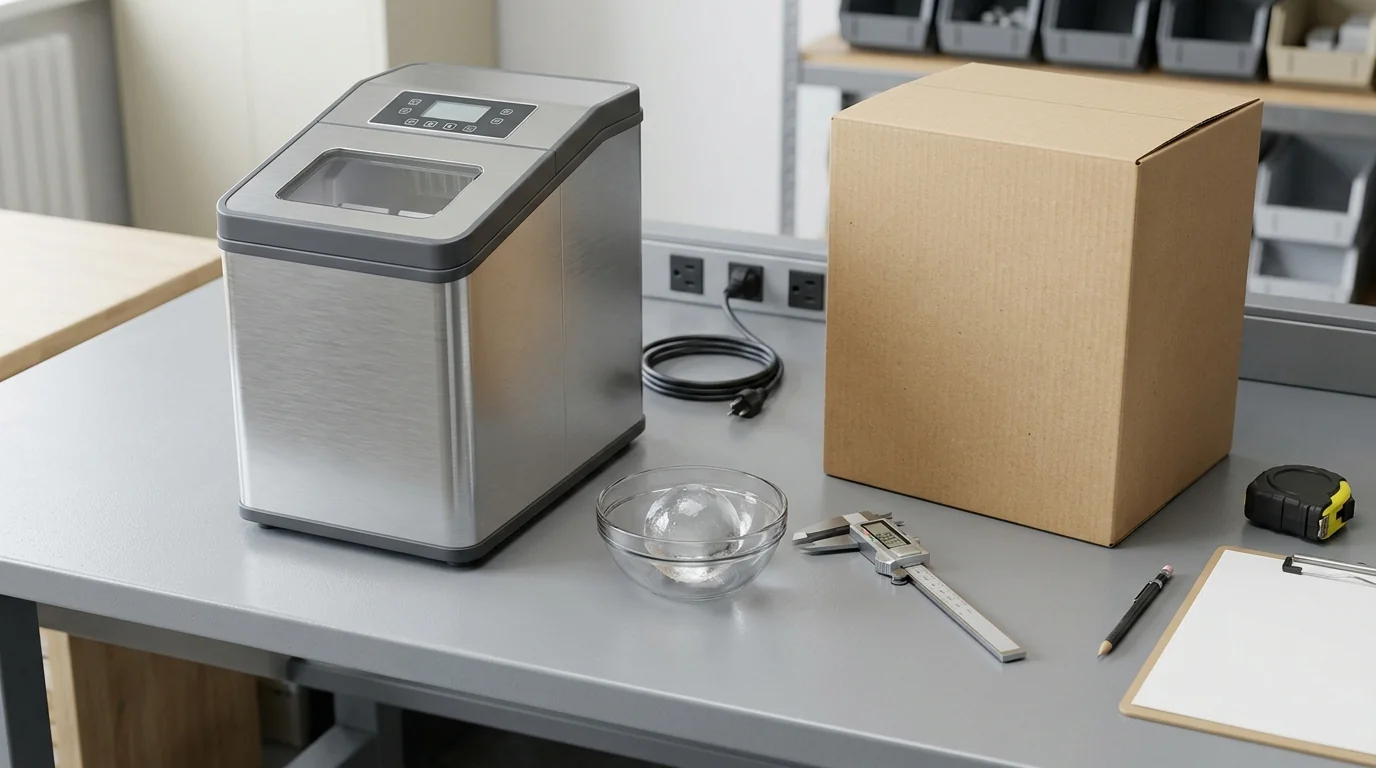
- Sphere Diameter and Mold Alignment: Confirm whether the selected platform produces 50mm or 55mm spheres (2 pieces per cycle), and inspect physical sample batches with digital calipers to verify seam uniformity and complete spherical filling across consecutive cycles.
- Cycle Stability and Real-World Output: Verify 24-hour piece output (typically 42 to 72 spheres depending on model) under realistic ambient room temperatures (such as 21°C / 70°F vs. 30°C / 86°F) and confirm how the insulated storage bin handles melt water drainage and re-use.
- Water Tank and Drainage Convenience: Check the 1.2L internal reservoir access, water-shortage indicator response, and bottom drain plug seal during multi-day continuous test runs.
- Voltage, Frequency, and Plug Matching: Confirm 110-120V/60Hz vs. 220-240V/50Hz compressor specifications and localized power cord plugs for each destination country.
- Light Private Label and Drop-Test Packaging Scope: Align on ready-to-market customization options including front logo printing, housing colorway (such as matte black-and-white or stainless accents), angled control panel graphics, multilingual user manuals, and ISTA-style drop-tested gift boxes and master cartons.
Frequently Asked Questions
Is there any difference between sphere ice and ball ice?
No, sphere ice and ball ice refer to the exact same round 50mm to 55mm ice format used in whiskey and craft cocktail service. In B2B product sourcing and SEO, "sphere ice maker" and "automatic ice ball maker machine" are used interchangeably, though adding "automatic machine" is recommended to distinguish electric appliances from silicone freezer trays.
Why do some machine-made ice spheres have a cloudy center or seam line?
Ice clarity and seam appearance depend on dissolved air and mineral content in the water supply, freezing speed, and how tightly the two hemispherical mold halves seal during the 35 to 55 minute freezing cycle. Using filtered or low-TDS potable water and verifying mold gasket alignment during sample inspection helps minimize visible seam ridges and surface cloudiness.
Can a compact countertop sphere ice maker run without a plumbing hookup?
Selected countertop sphere ice maker platforms are built around a self-contained 1.2L internal water tank that allows portable placement on home bars, office counters, and tasting tables without permanent water line plumbing. Buyers should always confirm exact water supply options, drain plug layout, and reservoir capacity on the model specification sheet.
What private label customization options are realistic for countertop sphere ice makers?
Rather than expensive ground-up custom tooling, most retail and hospitality brands use ready-to-market sphere ice maker platforms with light customization. Depending on model selection and order volume, customizable elements typically include silk-screened or badge logos, housing color accents, control panel overlays, retail color boxes, and localized manuals.
What documents should importers request before shipping sphere ice makers?
Importers should request model-specific electrical safety certificates for the destination market (such as ETL for North America or CE/RoHS for Europe), food-contact material reports (FDA or LFGB), refrigerant safety documentation for R290 units, and pre-shipment inspection records covering functional ice-making cycles and carton drop tests.
Discuss Countertop Sphere Ice Maker Sourcing with Crylivo
Planning to add a compact automatic sphere ice maker to your home bar appliance lineup, specialty retail catalog, or hospitality supply program? Crylivo supports global B2B buyers with ready-to-market 50mm and 55mm sphere ice maker platforms, model-specific specification sheets, and practical private label customization for logos, housing finishes, control panels, and retail packaging. Reach out through the Crylivo B2B sourcing and sample inquiry page to share your target market, voltage requirements, and estimated order volume.
Looking for the right ice maker for your market?
Tell us your ice type, capacity and target region. Our team will recommend the best platform from our OEM/ODM lineup.
Get a Quote →