Quick Answer: Is There Any Difference Between Ball Ice and Sphere Ice?
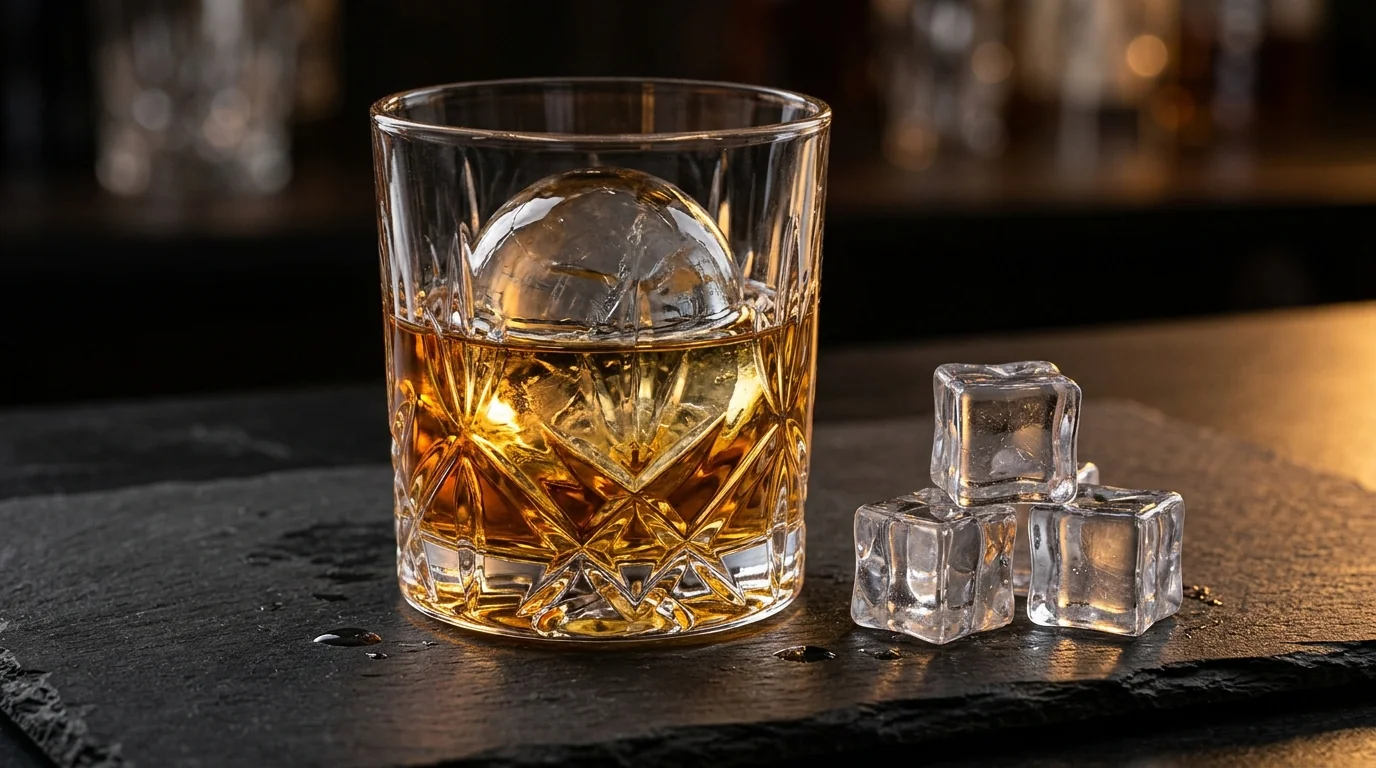
In physical geometry and beverage service, ball ice and sphere ice are identical: both terms describe a solid, round ball of ice—typically 50mm to 55mm in diameter—used to chill whiskey, bourbon, and craft cocktails with minimal dilution. However, in e-commerce, SEO, and B2B appliance sourcing, the two phrases carry different commercial search risks. Queries for 'ball ice' or 'ice ball maker' are heavily mixed with low-cost silicone freezer molds, whereas 'automatic sphere ice maker' and 'ice ball maker machine' signal high-intent buyers looking for a powered countertop refrigeration appliance.
Why Do Beverage Buyers Use Both 'Ball Ice' and 'Sphere Ice' for the Same Round Ice?
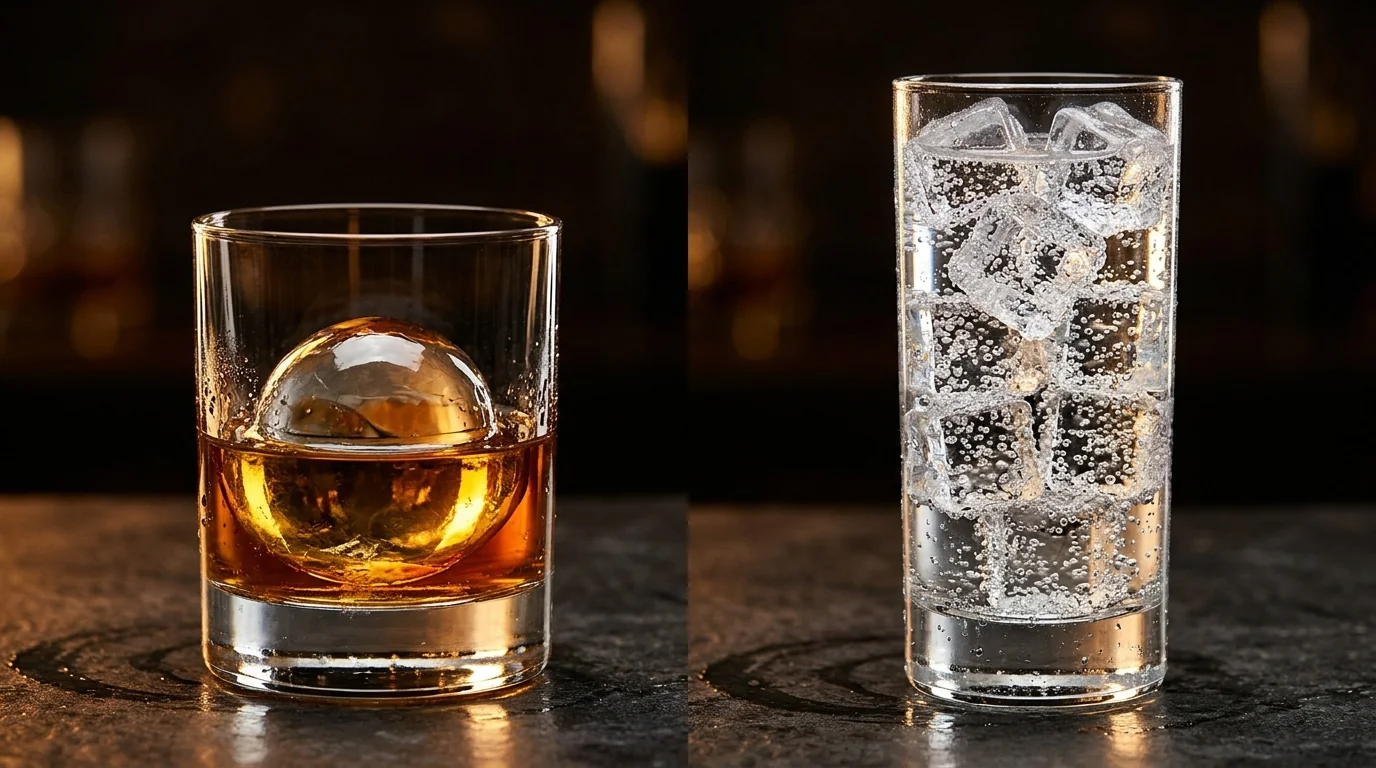
Across the global beverage, hospitality, and home bar industries, terminology for round cocktail ice evolved along two parallel tracks. Bartenders, spirit brands, and everyday consumers in North America and the United Kingdom casually refer to a large round piece of ice in a rocks glass as an 'ice ball' or 'whiskey ball ice.' Meanwhile, industrial designers, appliance manufacturers, and specialty hospitality catalogs prefer the geometric term 'sphere ice' to emphasize precision round symmetry and distinguish machine-formed ice from irregular rounded cubes.
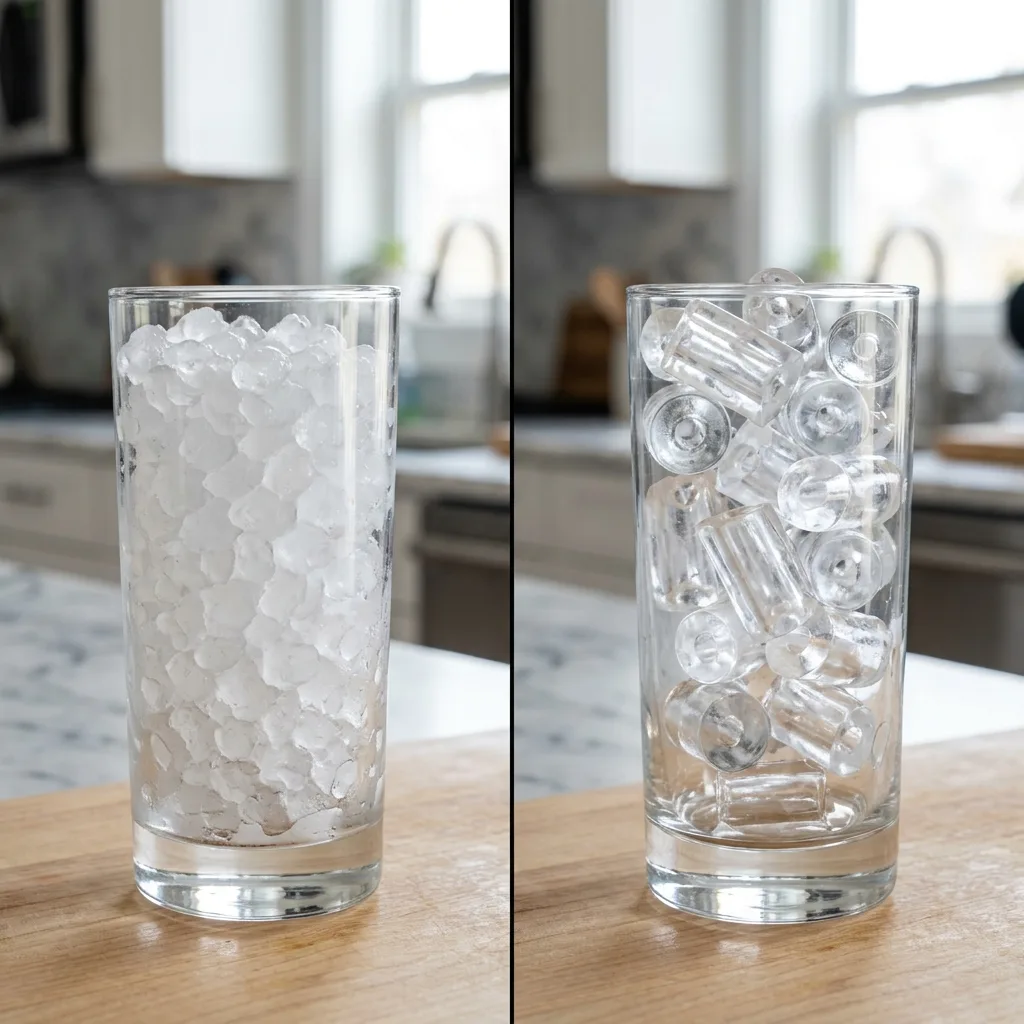
Regardless of which label appears on a menu or retail box, the functional beverage physics are identical. As detailed in our technical overview of what sphere ice is and why round ice melts slowly, a solid 50mm or 55mm round ice ball minimizes exposed surface area relative to its internal mass. When poured over with aged whiskey, rum, or a stirred cocktail, the round sphere chills the liquid steadily without the rapid corner erosion seen in smaller square or hollow bullet ice.
For B2B appliance brands and importers, understanding that ball ice and sphere ice are physical synonyms is essential when writing product titles, packaging copy, and user manuals. A well-structured product listing captures both vocabulary habits—using 'automatic sphere ice maker' as the primary technical title while naturally incorporating 'ice ball maker machine' and '50-55mm whiskey ice ball' in subheadings and specification tables.
The Critical Commercial Distinction: Automatic Ball/Sphere Ice Machines vs. Silicone Freezer Molds
While ball ice and sphere ice mean the same thing in a glass, failing to separate electric appliances from manual freezer trays is one of the most common positioning mistakes in retail and B2B catalog management. On search engines and online marketplaces, bare keywords like 'ice ball maker' or 'sphere ice mold' are dominated by two-piece silicone trays and plastic freezer molds priced as low-cost kitchen gadgets. If an appliance brand labels a $300+ countertop refrigeration unit simply as a 'Ball Ice Maker,' it risks attracting consumer mold traffic while missing commercial appliance buyers.
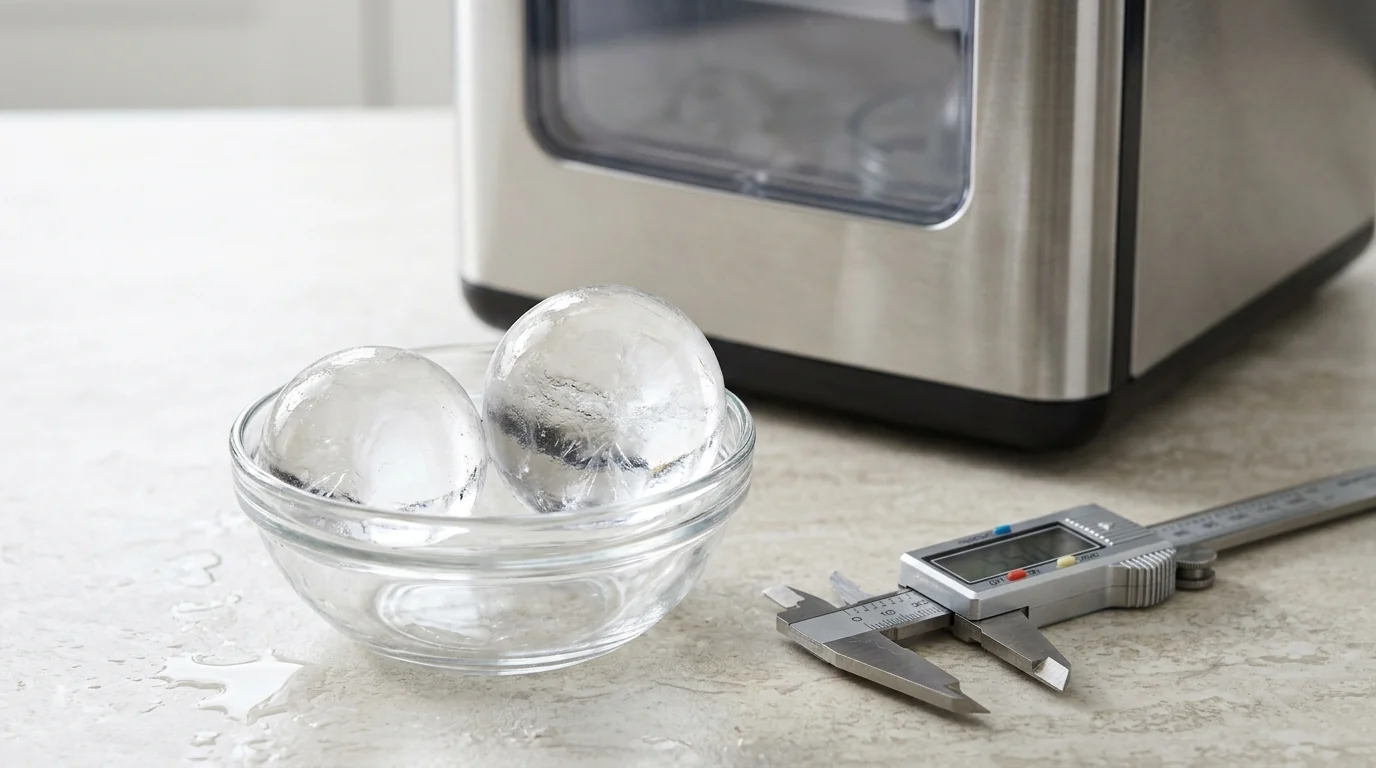
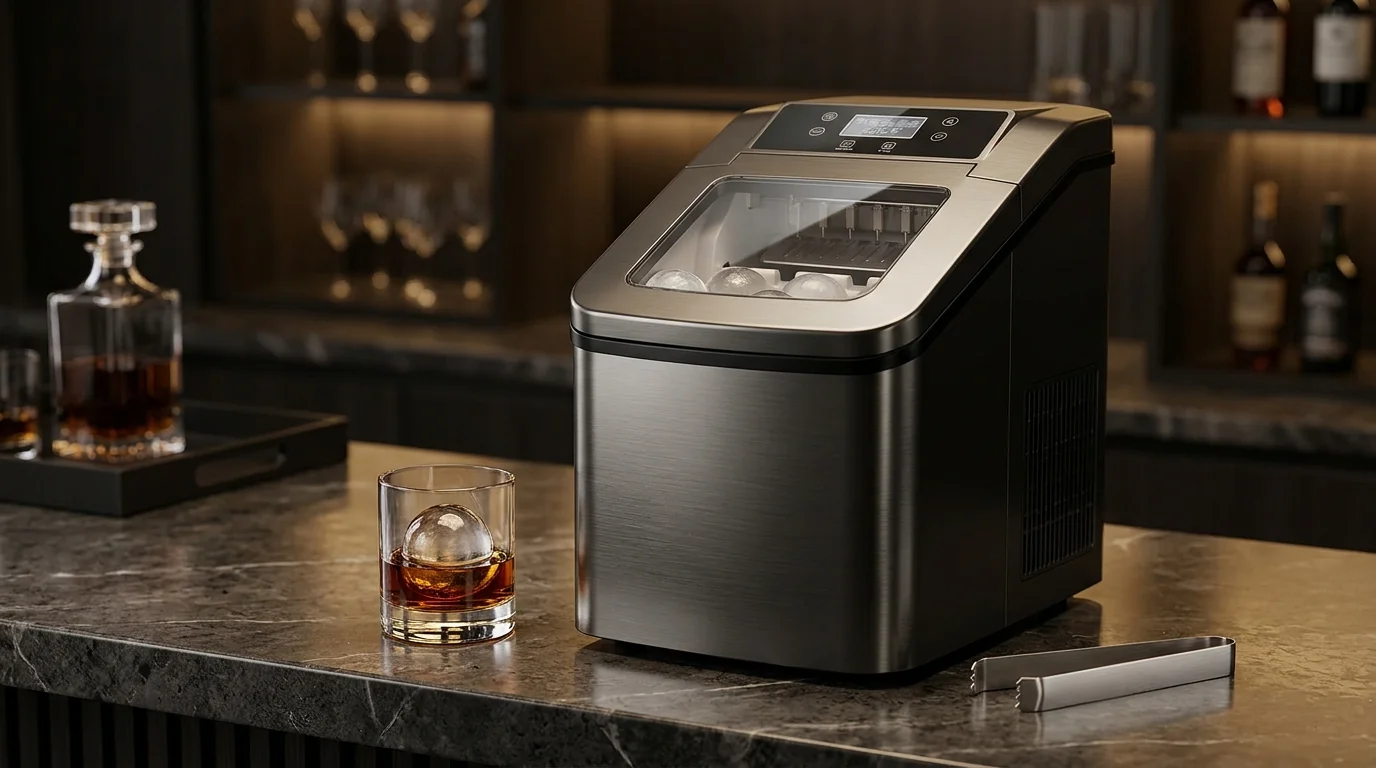
An electric countertop machine in Crylivo's automatic sphere and ball ice maker lineup operates as a self-contained compressor-driven appliance rather than a freezer tray. Users fill a 1.2L internal water reservoir, press the start button on an LED control panel, and let the internal refrigeration loop freeze and harvest 2 solid 50mm or 55mm ice balls every 35 to 55 minutes—accumulating 42 to 72 spheres over 24 hours without opening a household freezer.
| Comparison Factor | Automatic Sphere / Ball Ice Maker Machine | Manual Silicone / Plastic Ice Ball Mold | Heated Metal Ice Ball Press |
|---|---|---|---|
| Equipment Category | Powered countertop refrigeration appliance | Passive household freezer accessory | Manual bar countertop thermal press |
| Ice Production Method | Automated water metering, enclosed mold freezing & harvest | Manual tap filling and static household freezer storage | Requires pre-frozen large solid ice blocks carved by weight |
| Batch Cycle Time | 35-55 minutes per cycle (2 spheres of 50mm or 55mm) | 6 to 12 hours per batch inside a freezer | 1-2 minutes pressing time (after 24h block freezing) |
| 24-Hour Output Capacity | 42-72 spheres / 24h continuous automated operation | Typically 2 to 6 spheres per tray per day | Limited by pre-frozen ice block supply and manual labor |
| Storage & Sensor Control | Insulated front ice drawer with bin-full & water sensors | Takes up freezer shelf space; prone to spills and freezer odor | No built-in storage; requires separate freezer and melt drain |
| Target Search & B2B Modifiers | 'automatic sphere ice maker', 'ice ball maker machine' | 'silicone ice ball mold', 'sphere ice tray' (exclude in B2B SEO) | 'ice ball press' (niche bartender tool) |
Note: Automatic sphere ice maker cycle times (35-55 min) and 24-hour outputs (42-72 pcs) represent Crylivo platform reference ranges and should be confirmed by exact model and ambient conditions.
How Should B2B Brands Map 'Ball Ice' and 'Sphere Ice' Keywords Across Their Website?
When structuring a B2B appliance website or multi-SKU retail store, clear keyword governance prevents internal page cannibalization and filters out low-value mold shoppers. Across Crylivo's compact countertop ice maker catalog, commercial category and product detail pages always pair 'sphere' or 'ball' with hardware qualifiers such as 'automatic,' 'countertop,' or 'machine.'
Specifically, the commercial category page owns transactional hardware queries including 'sphere ice maker,' 'ball ice maker,' 'automatic sphere ice maker,' and 'ice ball maker machine.' Individual model pages target capacity and industrial-design long-tail queries—such as a 50mm or 55mm countertop automatic sphere ice maker with an angled control panel or black-and-white housing. Meanwhile, educational blog guides answer 'ball ice vs sphere ice' and 'what is sphere ice' to capture early-stage research and pass internal link authority back to the commercial category.
In international B2B trade, regional terminology preferences also shape product localization. North American and UK buyers search heavily for both 'sphere ice maker' and 'whiskey ice ball machine,' whereas German ('Eiskugelmaschine'), French ('machine à glaçons sphériques'), and Spanish ('máquina de hielo esférico') buyers frequently translate 'ball' and 'sphere' into distinct local nouns that require native SERP verification before launching localized packaging or web pages.
What Should Importers and Private Label Buyers Verify Before Ordering Sphere Ice Machines?
Whether your brand markets the appliance as an Automatic Sphere Ice Maker or a Countertop Ice Ball Machine, pre-shipment technical verification follows the same engineering discipline. Sourcing teams partnering with Crylivo's ISO 9001:2015 manufacturing and private label engineering team should evaluate both the physical 50-55mm ice output and the model-specific compliance dossier.
Because selected countertop sphere platforms utilize R290 hydrocarbon refrigerant for efficient heat extraction during the 35 to 55 minute freezing cycle, importers should verify compliance with the U.S. EPA SNAP hydrocarbon refrigerant framework and international IEC safety standards. All internal water-contact components—including the 1.2L water tank, feed tubing, enclosed hemispherical mold cavity, and storage basket—must be supported by model-specific test reports aligned with U.S. FDA 21 CFR food-contact material regulations or European LFGB standards, paired with electrical safety certifications such as the Intertek ETL Listed safety mark or EU CE/RoHS documentation.
- Hardware Terminology on Retail Cartons: Print 'Automatic Countertop Sphere Ice Maker' or 'Automatic Ice Ball Maker Machine' prominently on gift boxes and e-commerce titles so buyers immediately recognize an electric appliance.
- Sphere Diameter Specification (50mm vs. 55mm): Confirm the exact mold diameter (50mm or 55mm, 2 pieces per cycle) and 24-hour output rating (42-72 pcs/24h) on the model datasheet before printing packaging artwork.
- Negative Keyword Filtering for E-Commerce: Exclude 'silicone,' 'mold,' and 'freezer tray' from paid search campaigns and B2B catalog tags to keep traffic focused on powered machines.
- Sample Cycle & Sensor Testing: Run physical sample units across multiple consecutive 35-55 minute cycles to verify smooth sphere release, infrared bin-full detection, and low-water shutoff accuracy.
- Light Private Label Customization: Confirm MOQ and lead-time brackets for custom brand logos, housing color combinations, control panel graphics, and localized manuals.
Frequently Asked Questions
Do ball ice makers and sphere ice makers produce different ice shapes?
No, both terms refer to the exact same round 50mm to 55mm ice sphere. 'Ball ice' is the everyday conversational term used by consumers and bartenders, while 'sphere ice' is the formal geometric term preferred on commercial appliance spec sheets.
Why do search results for 'ball ice maker' show silicone trays instead of machines?
Many e-commerce marketplaces group inexpensive two-piece silicone freezer molds under 'ice ball maker.' Adding 'automatic,' 'electric,' or 'countertop machine' to product titles and search queries separates compressor-driven appliances from manual freezer trays.
How many ice balls can an automatic countertop sphere ice maker produce per day?
Depending on the selected model platform, sphere diameter (50mm vs. 55mm), and ambient room temperature, Crylivo countertop sphere ice makers are designed around a reference output of 42 to 72 spheres per 24 hours, producing 2 spheres every 35 to 55 minutes.
Should a private label brand use 'Sphere Ice Maker' or 'Ice Ball Maker Machine' on its packaging?
Most successful home bar and appliance brands combine both terms: using 'Automatic Countertop Sphere Ice Maker' as the primary product name on the front panel while including '50mm/55mm Whiskey Ice Ball Maker Machine' in the feature bullets for maximum search coverage.
What safety and food-contact documents should buyers request for automatic ball ice machines?
Buyers should request model-specific electrical safety reports (such as ETL for North America or CE/CB for Europe), food-contact test declarations (FDA 21 CFR or EU LFGB) for the 1.2L water tank and mold assembly, and R290 refrigerant compliance records.
Source Automatic Sphere and Ball Ice Makers with Crylivo
Ready to launch an automatic countertop sphere ice maker under your own brand without getting lost in low-end ice mold search results? Crylivo provides global B2B buyers with ready-to-market 50mm and 55mm automatic sphere ice maker platforms, clear technical datasheets, and light private label customization for logos, housing finishes, and retail gift boxes. Visit the Crylivo B2B sourcing and sample inquiry page to confirm model specifications, target market voltage options, and order quantities.
Looking for the right ice maker for your market?
Tell us your ice type, capacity and target region. Our team will recommend the best platform from our OEM/ODM lineup.
Get a Quote →